
הלוואה גרייס: איך זה עובד ולמי זה באמת מתאים?
In the Israeli credit market of 2025, one of the most sought-after products is a loan with a grace period. The word "grace" has become synonymous with immediate cash flow relief, but behind the temptation of "low repayment now" lies a higher cost in the long term and risks that many do not take into […]
 In the Israeli credit market of 2025, one of the most sought-after products is a loan with a grace period. The word "grace" has become synonymous with immediate cash flow relief, but behind the temptation of "low repayment now" lies a higher cost in the long term and risks that many do not take into account. In this article, we will explain exactly how the mechanism works, detail all the types of graces that exist today, provide current numerical examples, and answer the most important question of all – who is it really suitable for and who is better off staying away from.
What exactly is a Grace loan?
A grace loan is any loan (mortgage, general purpose loan, business credit, or balloon loan) that has a pre-determined period of 3 months to 5 years during which the borrower pays less than the normal repayment – or no principal at all. Interest can be deferred, accrued, or continue to be paid as usual, depending on the type of grace.
In Israel today there are four main types:
- Full grace – no principal or interest is paid. The interest is deferred or added to the principal (the principal grows).
- Classic partial grace – you only pay interest, no principal at all.
- Principal only grace – defer only the principal, continue to pay full interest.
- Gradual grace – each month you pay an increasing percentage of the principal (very popular with 2024–2025 mortgages).
Current numerical example (November 2025)
We will take out a loan for any purpose of 400,000 NIS for 10 years at prime interest + 1.8% (about 8.25% as of today).
- Regular repayment without grace: approximately 5,380 NIS per month
- With a partial grace period of 36 months (interest only): – The first 36 months: only 2,750 NIS per month – From month 37 onwards: approximately 6,450 NIS per month (a jump of approximately 3,700 NIS!)
The difference of about NIS 2,600 per month during the grace period seems tempting, but at the end of the period the repayment is about 20% higher than the original repayment.
Who is Grace Loan really suitable for?
Not everyone. On the contrary – most private clients who request Grace do so for the wrong reasons. Here are the profiles where Grace is an excellent tool:
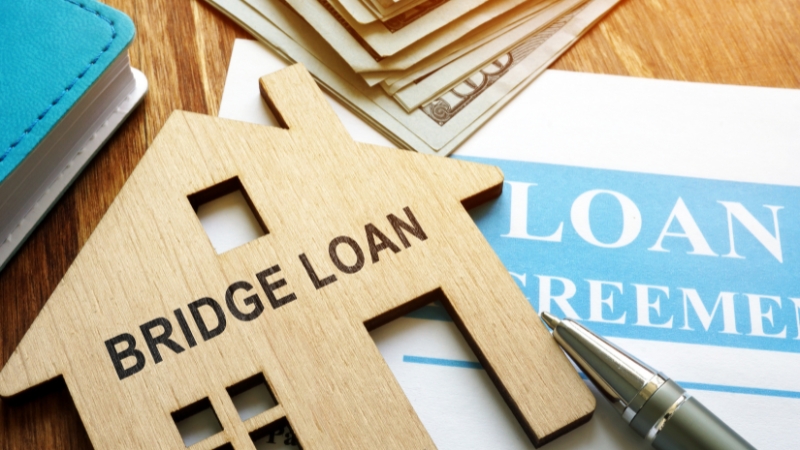
- Home improvement buyers with a short cash flow gap sell an apartment for 4 million and buy one for 5.5 million. Until the money from the sale comes in (usually 4–10 months), they take out a bridge with a one-year grace period. At the end of the grace period, they repay the entire loan at once – the grace period saves them tens of thousands of shekels in unnecessary interest.
- Young families with a baby on the way or a couple moving house who know that in the next two years one of the parents will be taking unpaid leave or that their income will increase significantly (promotion, returning to full-time work). A grace period of 24–36 months gives them breathing space until the budget stabilizes.
- Self-employed and businesses investing in growth A business that buys a machine for NIS 800,000 and knows it will increase sales by 40% within a year and a half. A partial grace period of 24 months allows it to pay only interest until the investment begins to pay back itself.
- Professional real estate investors buy a home for improvement or flip, planning to sell within 18–36 months. Full or partial grace allows them to hold the property with minimal monthly expenses until the sale.
Who is a Grace loan really not suitable for?
- Anyone who takes out a loan for any purpose to finance vacations, weddings, a car, or current consumption
- How will someone who doesn't have a clear plan backed by numbers pay the high repayments that will come after Grace?
- Families already on the edge of liquidity – Grace is only postponing the crisis
- Those who think that "somehow we'll manage later" – statistics show that 68% of borrowers with grace over 24 months encounter difficulty when repayment jumps
Advantages vs. Disadvantages – Quick Comparison Table
| advantage | Major disadvantage |
| Major immediate cash flow relief | Much higher total cost |
| Flexibility during transition periods | Sharp jump in return at the end |
| There are no early departure penalties in most cases. | High risk if income does not increase as planned |
| Suitable for investments with an expected return | High temptation to take too high a sum |
7 golden rules before taking out a Grace loan
- Never take full grace unless you are an experienced real estate investor
- Always ask for a "worst case scenario" simulation – what happens if the interest rate increases by 2%?
- Limit the grace period to a maximum of 24 months (unless it involves mediation for the sale of an apartment)
- Make sure there is no setup fee that is too high on Grace.
- Combine with other routes to spread interest rate risk
- Check for a free early refund option after the grace period ends.
- Do the overall calculation – how much you will pay in the end compared to a regular loan
Summary
The Grace Loan is one of the most powerful financial tools available in the Israeli market today – but only when it serves as a temporary bridge and not as a magic solution. It really pays off. It is excellent for home improvement, for the self-employed in growth investments, and for professional investors who have a planned and clear exit. On the other hand, for those who are only looking to “lower the monthly repayment for a few more years,” it may become an expensive and painful trap.